Survive a Million Monkeys Beginner Guide: Tips and Strategies
Master the waves in Survive a Million Monkeys on Roblox. Learn essential tips for weapon tiers, class selection, and survival strategies to outlast the primate horde.
Published: Survive a Million Monkeys Wiki Editorial Team
Table of Contents
Getting Started: The Basics of Survival
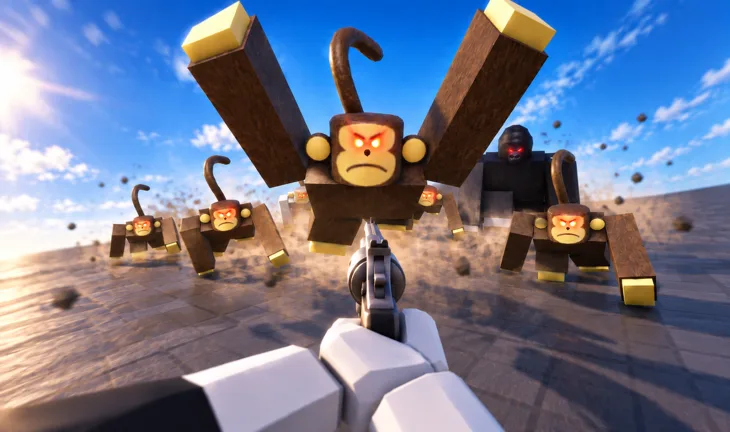
Survive a Million Monkeys, developed by gorilla warfare., is an intense action-survival experience where your primary goal is endurance. You are dropped onto an island and tasked with fending off waves of monkeys that grow in number and difficulty as the match progresses. Unlike many other shooters, the objective isn't to "win" a set number of levels, but to maximize your survival time and monkey kill count before eventually being overwhelmed.
Every monkey you defeat grants you Cash, a temporary currency that expires once your run ends. This Cash is vital for immediate survival, allowing you to upgrade your weapon tier, increase health, or deploy tactical equipment mid-match. Once you are defeated, the game calculates your reward in Gems based on your performance. These Gems are your permanent progression currency, which you can use in the hub area to purchase superior weaponry and specialized classes for future attempts.
Essential Controls and Tactical Actions
Mastering the game’s control scheme is the first step toward reaching higher waves. Efficiency is key when the screen begins to fill with enemies, so ensure your keybindings are second nature.
Movement: Standard WASD keys.
Combat: Use your mouse to aim and the Left Mouse Button to fire.
Upgrades: Press V to boost your weapon tier and C to increase your maximum health.
Tactical Gear: Use G to throw grenades for crowd control and X to place barricades for temporary protection.
Ultimate Ability: Press Q to activate your class-specific Ultimate once you have reached 100 kills.
Weapon Tiers and Progression Strategy
One of the most common mistakes beginners make is failing to upgrade their arsenal quickly enough. The game organizes weapons into four distinct tiers, and your ability to climb these tiers is directly linked to your survival rate.
Tier 1: Handguns
The starting point. These are reliable for early waves but struggle as enemy density increases.
Tier 2: Medium-Range
Includes shotguns. Ideal for clearing groups of monkeys that get too close to your position.
Tier 3: Assault Rifles
The bread and butter of the mid-game. These provide the fire rate needed for sustained combat.
Tier 4: Heavy Weaponry
Your end-game goal. These weapons are essential for surviving past wave 20 when enemies become significantly more resilient.
According to community reports, players should aim to reach Tier 4 by wave 20. Since you only use the basic handgun for a short period, it is often more efficient to save your Gems in the hub to unlock higher-tier weapons permanently rather than relying on mid-run upgrades alone. The faster you reach Tier 4, the easier it becomes to manage the massive waves that appear later.
Mastering the Class System and Ultimates
Classes are a game-changer that can significantly lower the difficulty of your runs. Each class provides unique passives, specialized equipment, and a distinct Ultimate move.
Unlike other actions that require Cash, your Ultimate move (activated via Q) is strictly tied to your performance. For every 100 monkeys you defeat, your Ultimate becomes available. Because these moves can provide stat boosts, massive damage, or enhanced gear efficiency, avoid wasting them on early, easy waves. Save your Ultimate for when you are cornered or facing a particularly tough wave of resilient monkey variants.
Advanced Survival Tactics
As you progress deeper into the game, the monkeys you encounter will become more diverse. You will transition from standard enemies to larger, tougher variants, as well as dangerous red exploding monkeys and resilient white monkeys.
Tip
The Wave 20 Shift: Up until wave 20, you might find success by "camping"—staying in one spot and using barricades to funnel enemies. However, after wave 20, the sheer volume of monkeys makes camping a death sentence. Switch to a "run-and-gun" playstyle, constantly moving around the island to prevent yourself from being surrounded.
If you find the standard mode too challenging, consider playing in multiplayer. You can team up with up to three other players. This not only makes wave management easier but also allows for better coverage of the map. Note that in Hardcore mode, the enemy configurations are much more aggressive, so coordinating your class choices with your teammates is highly recommended.
Frequently Asked Questions
Do I lose my weapons when a run ends?
Yes, the weapons and upgrades you purchase with Cash during a match are temporary and reset when you die. However, you keep the Gems you earned, which allow you to permanently unlock better gear in the hub.
Is it possible to win the game?
Survive a Million Monkeys is designed as an endurance test. While you can clear many waves, the game is meant to end in defeat eventually as the enemy count becomes unmanageable.
How can I get more Gems?
Gems are awarded based on your performance—specifically how many monkeys you kill and how many waves you clear. Using promo codes and playing in a team can also help you earn rewards more efficiently.